What happens if you invest earlier? Save more first? Upgrade your lifestyle as your income grows? Ricco is a free online financial simulation game: make a decision, advance a month, watch your situation change, and decide again - without risking real money.
The reason a simulation beats a static plan is that money decisions never stay in their own lane. In Ricco - as in life - your career feeds your income, your lifestyle shapes both your expenses and how you feel, the surplus you protect or invest determines how well you absorb the next surprise, and all of it rolls up into a net worth that only makes sense over time.
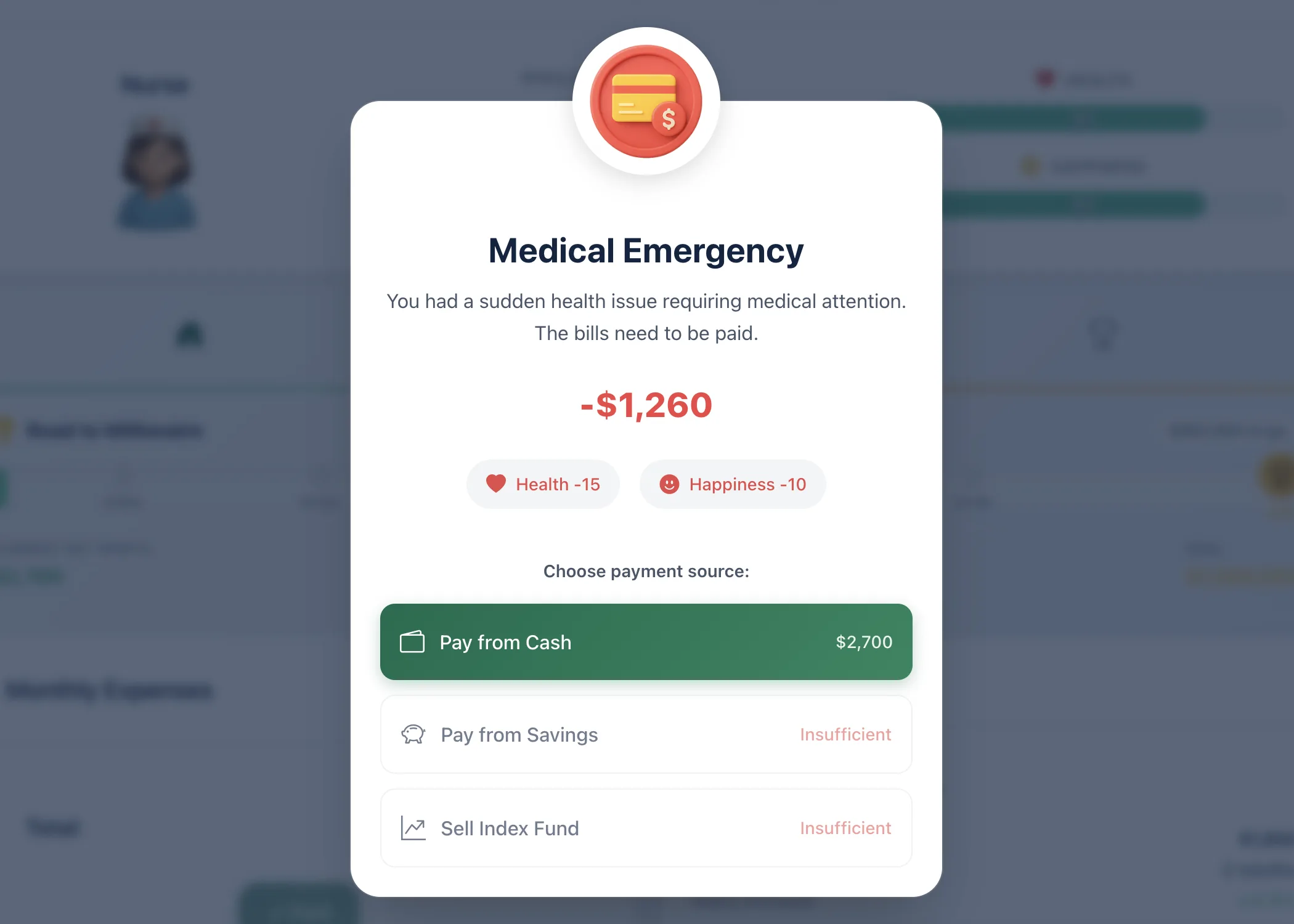
That connectedness is what makes Ricco a finance simulation game rather than a collection of mini-games. You aren't optimizing one number. You're steering a whole situation, and every part of it pushes back on the others. The medical emergency pictured here is one moment of that: a single event that hits your cash, your health, and your happiness at once - and makes you choose where the money comes from.
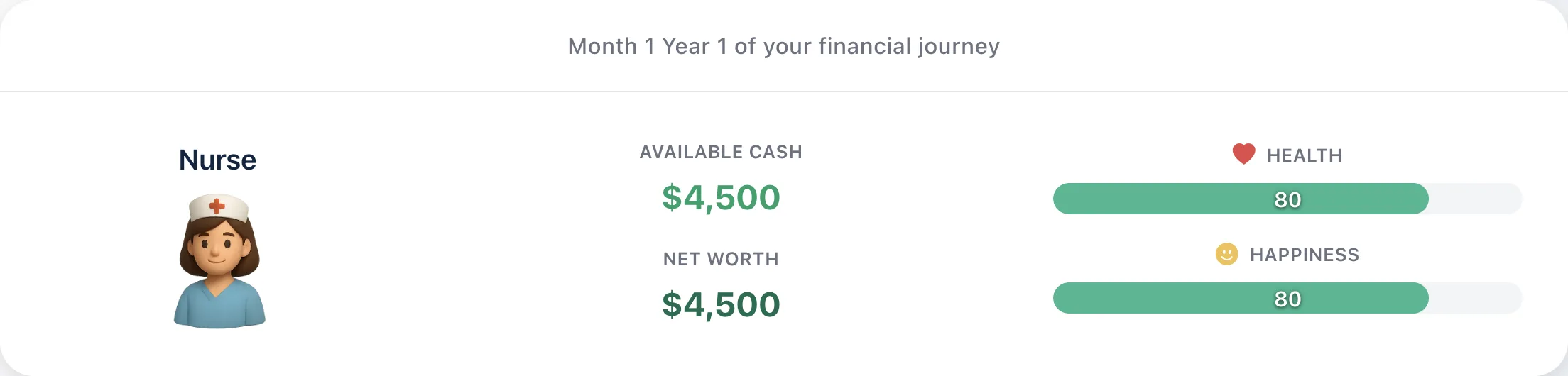
Your profession sets the paycheck that funds everything else - and in-game education can raise it partway through a run.
Five monthly bills, each at the spending level you choose. Your lifestyle sets your costs and your comfort at the same time.
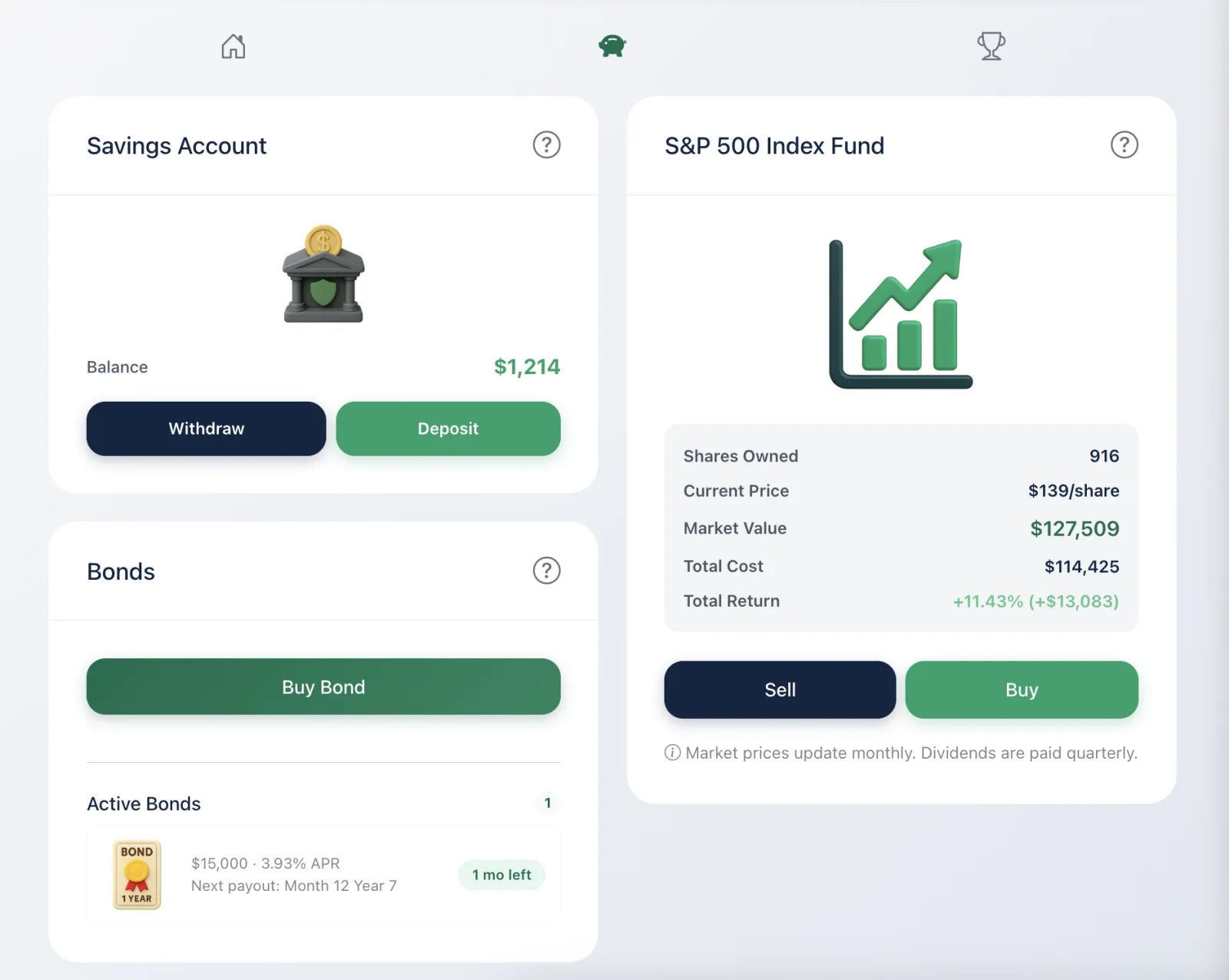
Whatever survives the bills can sit as cash, earn interest in savings, lock into bonds, or ride the market in an index fund.
Bonuses, repair bills, and tempting offers arrive on their own schedule, not yours - and stress-test whatever plan you've made.
Health and happiness respond to how you live. A run that ignores them ends early, no matter how good the portfolio looks.
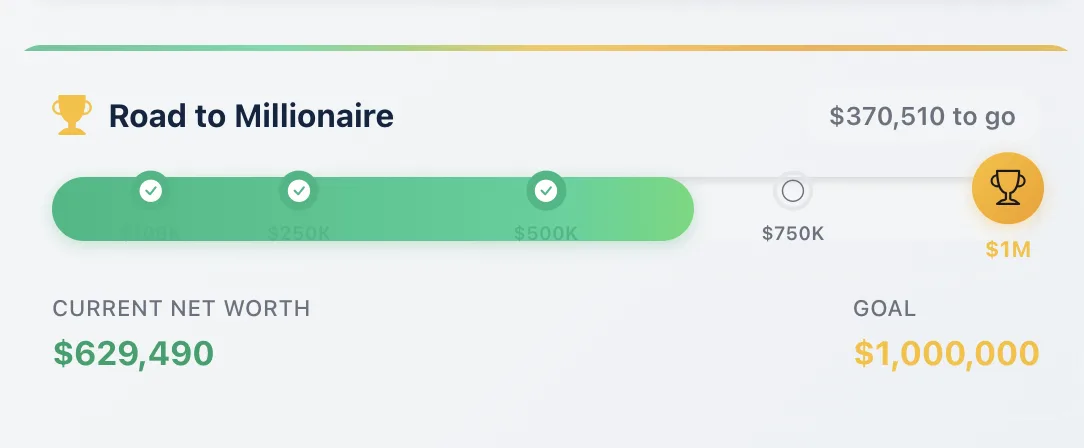
The scoreboard everything feeds: cash, savings, bonds, and index fund combined. Reach $1,000,000 and the run is won.
Every turn runs the same loop. What changes is the situation your last decisions created.
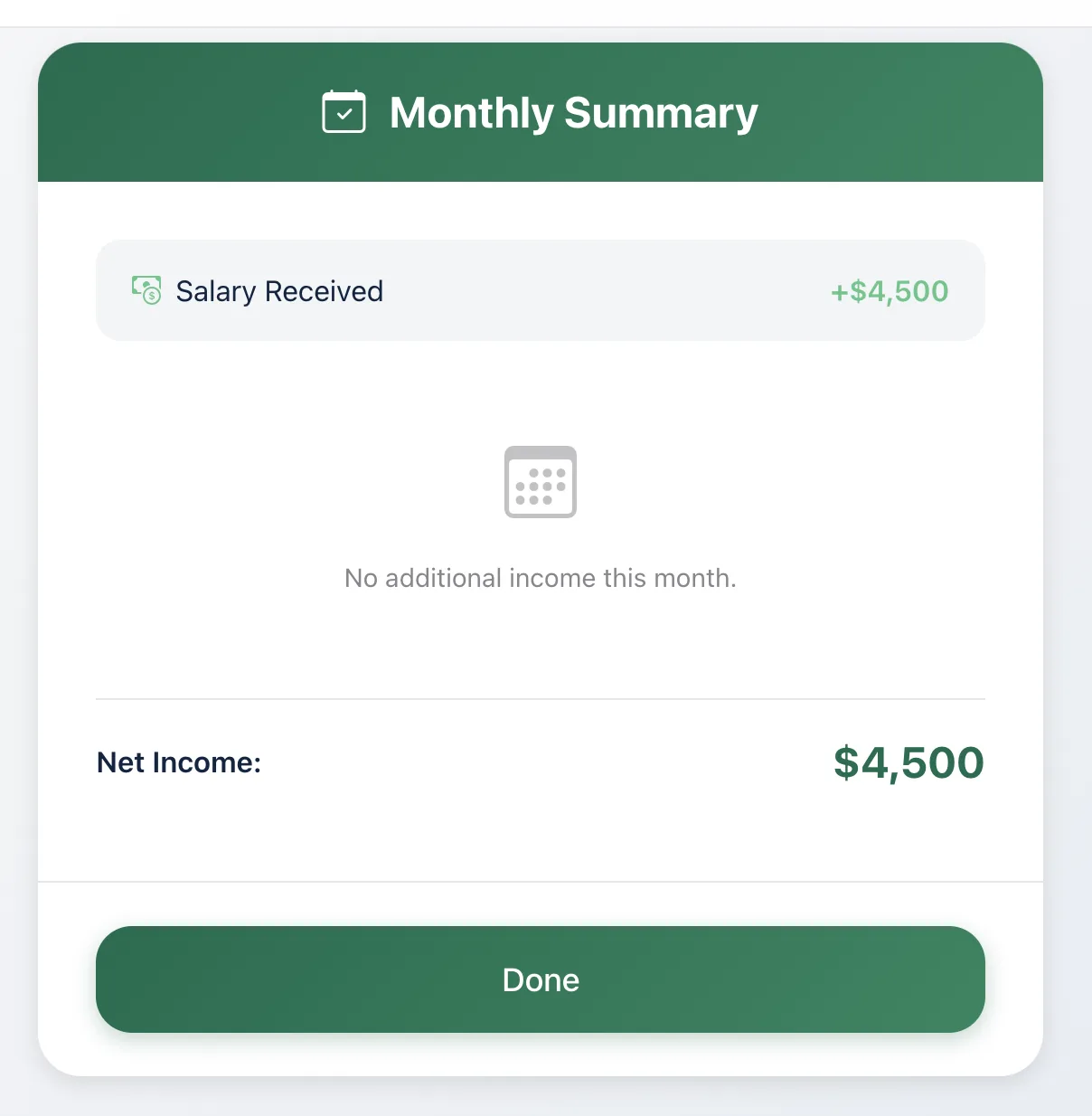
Your salary lands. If you finished an in-game course along the way, it's bigger than it used to be.
Rent, groceries, utilities, transportation, and entertainment - at whatever level you've set them. They're paid before the month can move on.
Some months pass quietly. Others bring a work bonus, a breakdown, a medical bill, or an offer you didn't plan for - each with a choice attached.
Adjust your lifestyle, move cash into savings, buy a bond, add to the index fund, start a course that raises your salary - or hold steady and build your buffer.
The month closes. Interest accrues, dividends arrive on their schedule, the market moves, and your net worth updates.
…and the next month opens in the world your decisions just built. That feedback loop - not any single choice - is what a financial simulation teaches.
Two players. Same career, same paycheck, same first month. The only difference is strategy.
Two new players start as Nurses: identical salary, identical bills, one month's pay in the bank. Then they make different first moves.
Keeps lifestyle lean and routes the surplus into savings first. Progress looks slow - the balance grows steadily, but nothing is compounding hard yet.
A repair bill lands and it's an inconvenience, not a crisis. Savings absorb it, nothing has to be sold, and the plan barely bends.
Starts investing later, from a position of safety. The portfolio is smaller than it might have been - but the run has never come close to breaking, and calm months make it easier to keep raising the stakes.
Opens the index fund almost immediately and locks the first spare cash into a bond. Compounding starts early, and the good market months feel great.
The same repair bill lands - but the cash buffer is thin. Covering it means selling shares, and if the market happens to be down that month, the loss becomes real.
If the run survives its thin stretches, the early start pays off: more time in the market is one of the strongest forces in the game. The portfolio leads - as long as the next surprise doesn't land at the wrong moment.
Neither future is the "right" one, and the game won't tell you otherwise. What a financial simulation gives you is the chance to be both players: run one strategy to its ending, start again as the other, and see which future you'd rather live in.
Every question below is an experiment you can run in Ricco. The game won't spoil the results.
Build the buffer first, then invest. Notice how it feels when the first big bill arrives - and what your portfolio gives up in exchange for that calm.
Put your very first surplus into the index fund and let time work. Then sit through your first bear market and see if you'd still call it easy.
Upgrade a spending level with every raise. Comfort climbs - watch what happens to the gap between what you earn and what you keep.
An in-game course drains cash today and raises every paycheck after. Take it early in one run and late in another, and compare.
Fund a comfortable lifestyle, protect your wellbeing, and find out how much progress a moderate surplus can still make over the years.
Keep everything invested and your cash thin. The simulation will eventually answer this one for you.
A single month in the simulation rarely proves anything. The real subject of a financial simulation is direction: which way each of these numbers is drifting, and what your decisions are doing to the trend.
| What You Watch | Why It Moves |
|---|---|
| Cash | Every paycheck, bill, and surprise flows through it first |
| Income | Rises permanently when in-game education completes |
| Expenses | Track the lifestyle levels you choose to fund |
| Savings & investments | Interest, bond payouts, dividends, and market swings |
| Health & happiness | Respond to how generously - or how thinly - you live |
| Net worth | The sum of it all, ticking toward $1,000,000 |
In real life, seeing a strategy's trend takes years. An online financial simulation game compresses those years into an evening, so the connection between what you chose and where you ended up is actually visible.
Both answer money questions. Only one makes you live with the answer.
A financial simulation game is a rehearsal space. Each of these skills shows up as a decision you make repeatedly, not a lesson you read once.
As a personal finance simulation game, Ricco teaches with consequences instead of quizzes. Make the call, see what happens, and let the next run benefit from the last one's mistakes.
You already have opinions about money. Test them. Run the frugal build, the early-investor build, the comfort-first build - and see which one you'd still defend afterward.
Want to feel a market dip, a thin month, or a big surprise bill without the real-world price? A money simulation game delivers the moment with none of the damage.
A financial simulation game models a financial life - income, expenses, savings, investments, and surprises - and puts you in charge of the decisions. Instead of reading about what an emergency fund or compounding does, you choose a strategy, advance through simulated time, and watch the consequences arrive. Ricco is a free, browser-based example built around one character's financial life.
In Ricco, each turn is one in-game month. Your salary arrives, your bills come due, and life occasionally interrupts with an unexpected event. You decide how much lifestyle to fund, how much cash to keep on hand, and what to save or invest - then advance the month and see how your situation changed. Every new month starts from the world your last decisions created.
Yes - that is the point of a simulation. Play a cautious run that builds a large cash buffer, then start a new game and invest earlier, spend more on lifestyle, or prioritize education instead. Because every run begins from the same kind of setup, the differences you see come from the decisions you made.
No. Everything in the simulation is play money. Mistakes cost in-game cash, health, or happiness - never your actual bank balance - which is exactly what makes it a safe place to experiment.
Yes. Creating an account and playing the core game is free. An optional one-time Premium upgrade ($9.99) unlocks advanced features, such as higher education levels and continued investing from Year 3 of a playthrough.
No. A calculator takes your inputs and returns one static number. Ricco is a simulation: you make a decision, time moves, circumstances change, and you decide again. What you get back isn't a figure - it's the experience of watching a strategy play out over simulated years.
Yes. You can delete a finished run and start fresh with a different career and a different plan. Replaying is where a simulation teaches the most, because you can compare how two approaches to the same situation actually felt - and where each one ended up.
Pick a strategy, play it forward, and watch what it builds - then try the opposite and compare. Free to play, right in your browser, with no real money on the line.