Ricco is a free online money management game. Every in-game month, one paycheck lands and the choices are yours: spend it, keep it as cash, save it, invest it, or put it into raising your income - then watch what each decision does to the rest of your financial life.
A budget is a plan: income at the top, expenses underneath, and hopefully something left over. Building that plan is a skill of its own - one our budgeting game walks through line by line. But most money stress doesn't come from writing the plan. It comes from the decisions that follow it: the lifestyle upgrade you can technically afford, the surplus sitting idle in checking, the repair bill that arrives the week after you moved your cash into investments.
Money management is that second half. It's deciding how much lifestyle to buy, how much cash to keep within reach, when to save, when to invest, and when circumstances change, how to adjust without wrecking the plan. In Ricco, every one of those calls is a move you actually make - and the game plays the consequences back to you, month after in-game month.
A paycheck arrives every in-game month. Education can raise it permanently.
Five bills come due at whatever lifestyle level you choose to fund.
Cash and savings stand between you and the surprise that lands every few months.
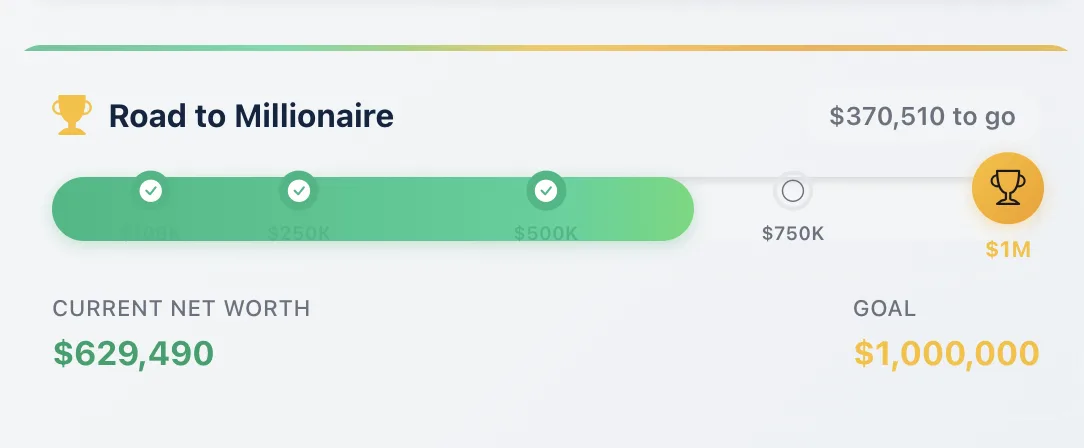
Bonds, an index fund, and a rising salary compound whatever is left.
Start a game as a Nurse and these are your real opening numbers. What you do next is the whole game.
Buy the better life now, manage what's left.
Upgrading a category to Balanced Living costs more each month and boosts your health and happiness - and those stats matter, because letting either collapse ends the game. Push all the way to Premium Lifestyle, though, and the bills hit $5,040: more than the paycheck itself.
Build the cushion before anything else.
A few months of this and a sudden medical bill becomes an annoyance instead of a crisis. Savings stay liquid - you can pull money back out whenever a bill demands it.
Put every spare dollar to work immediately.
Compounding starts earliest on this path. The index fund pays dividends every quarter, bonds pay interest every year, and an in-game course permanently raises every paycheck you'll ever collect.
Ricco doesn't tell you which of these is correct, because none of them is. The game lets you actually play each one - and a decision made in one corner of your finances shows up everywhere else: in your buffer, your stats, your net worth, and how well you absorb the next surprise.
Every decision below is one you actually make in the game - usually more than once.
Each of your five monthly expenses - rent, groceries, utilities, transportation, and entertainment - can be set to one of four spending levels. Cheaper living frees up cash but drains your health and happiness; nicer living boosts them but eats the surplus. You'll adjust these dials all game long, because the right answer changes as your situation does.
The four spending levels in Ricco
| Level | The Trade-Off |
|---|---|
| Bare Minimum | Cheapest way to live, but it wears down your health and happiness |
| Basic Comfort | The sustainable default - nothing gained, nothing lost |
| Balanced Living | Costs more, lifts your well-being |
| Premium Lifestyle | The best life in the game - if the paycheck can carry it |
Every few in-game months, a life event lands. When it's an expense event, the bill blocks your progress until it's paid - from cash, from savings, or by selling index fund shares. Keeping everything invested maximizes growth right up until the month it forces a bad sale. How big a buffer feels safe enough is a decision you'll revisit constantly.
Expense events that can hit your buffer
| Event | Why It Hurts |
|---|---|
| Appliance Breakdown | An essential replacement that can't wait |
| Home Repair Needed | Ignoring it isn't an option |
| Car Trouble | Arrives whether or not this was a good month |
| Medical Emergency | The big one - and it hits your health too |
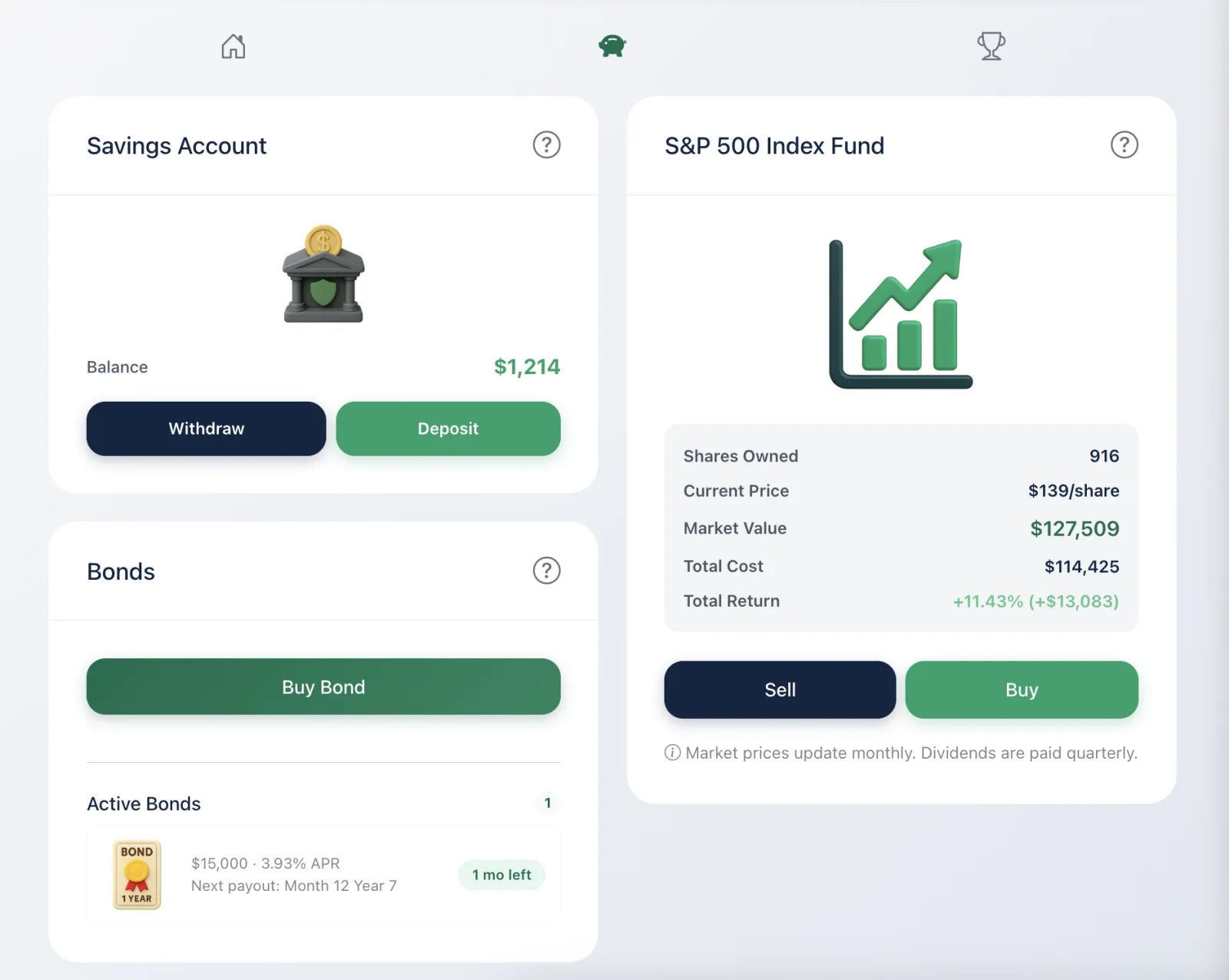
Ricco gives your spare cash three places to live, each with a different deal. A savings account earns interest and stays available whenever you need it. Bonds lock money away for 1, 5, or 10 years and pay interest every year. An S&P 500-style index fund pays quarterly dividends and offers the strongest long-term growth - but swings through bull and bear markets on the way. Splitting money among them, and shifting the split over time, is where the game starts to feel like real portfolio thinking.
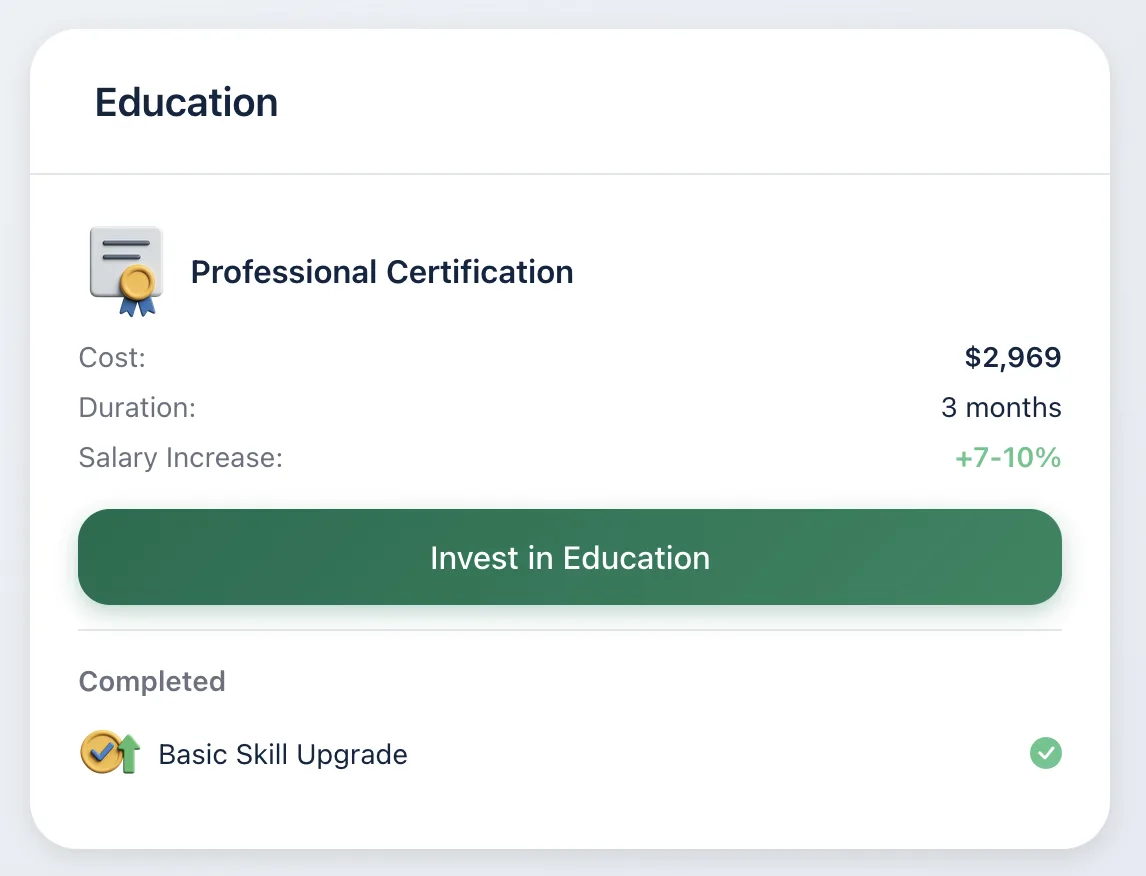
The one investment that isn't an account: education. In-game courses cost a large chunk of cash up front and take months to finish - the Professional Certification pictured here costs $2,969 over three months - and permanently raise your salary when they're done. Taken early, the raise compounds through years of paychecks; taken late, it's safer but worth less. Our personal finance game page walks through this exact decision from a real playthrough.
Not every surprise is a bill. A Work Bonus drops extra cash in your lap out of nowhere; a Dream Vacation offer tempts you to trade a chunk of it for the health and happiness a frugal stretch wore down. Income rises after a course. A bad market shrinks your fund the same month rent is due. Money management in Ricco isn't executing one perfect plan - it's noticing the situation changed and deciding what the new right move is.
The same surprise, two defensible answers
| Dream Vacation offer | What happens |
|---|---|
| Accept | Costs a real chunk of cash, restores health and happiness |
| Decline | Keeps the cash, skips the boost your stats may need |
Tracking apps are great at telling you what you did. They're not built to let you practice what you'd do differently.
You've read "spend less than you earn" and "build an emergency fund" a hundred times. A money management game turns the advice into decisions you've actually made before they cost real money.
Sit through your first simulated bear market, collect your first quarterly dividend, and learn what bonds actually do - all with play money, before any of it involves yours.
When every real month ends the same way, rehearsing a different one helps. Run a month where you save first, or invest first, and see how it feels when the surplus finally goes somewhere.
A money management game is a simulation where you practice deciding what to do with money - how much to spend, how much cash to keep on hand, when to save, and when to invest - and see the consequences without real-world risk. In Ricco, you manage one character's monthly paycheck: bills come due, a surprise lands every few months, and your decisions compound into a net worth score over in-game years.
Budgeting is about building the plan: matching income against expenses and deciding what each category gets. Money management is everything that happens after the plan exists - executing it, deciding what to do with the surplus, and adapting when something unexpected changes the math. Ricco covers both sides of that line in one game; our budgeting game page focuses on the plan, while this page covers the decisions around it.
Yes. You can create an account and play the core game for free. There is an optional one-time Premium upgrade ($9.99) that unlocks advanced features, such as the higher education levels and continued investing from Year 3 of a playthrough.
No. Ricco is an online money management game that runs in your browser on desktop and mobile, with nothing to install. The game saves automatically after every in-game month, so you can play in short sessions.
A game can't replace financial advice, but it gives you something articles can't: repetitions. In Ricco you face the same categories of decisions - lifestyle, cash buffer, saving, investing, income - dozens of times, and consequences that take years in real life arrive within a session. Practicing the decision, not just knowing the rule, is what the game adds.
Yes. Ricco is a money management game for adults: the situations are salaries, rent, car repairs, medical bills, bonds, and index funds, not allowance and lemonade stands. Beginners can learn the basics safely, and it also works for students and classrooms.
Spend it, save it, invest it - then find out what that choice sets in motion. Free to play, right in your browser, no real money at risk.